PRESS RELEASE
24 July 2026
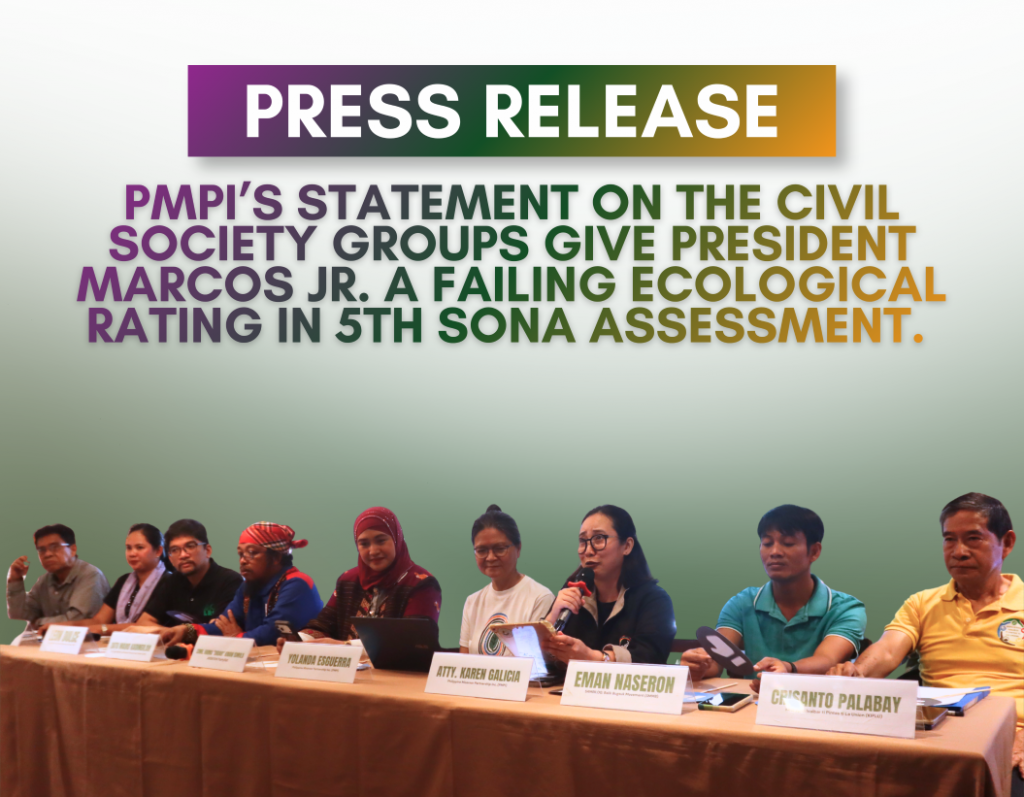
Civil Society Groups Give President Marcos Jr. a Failing Ecological Rating in 5th SONA Assessment.
Quezon City, Philippines – 24 July 2026 The Philippine Misereor Partnership Inc. (PMPI) and Rights of Nature Philippines, together Akbayan Legislators, civil society organizations with their community partners across the country,convened a press conference today to present an independent ecological assessment of President Ferdinand Marcos Jr.’s five-year performance. The event featured the Green Scorecard, where communities directly affected by environmental policies and projects gave their own ratings to the administration.
The press conference highlighted the worsening triple planetary crisis—climate change, biodiversity loss, and pollution—and asserted that the administration has failed to respond to the ecological emergency confronting the Philippines, the world’s most climate‑vulnerable nation.
The Ecological Assessment
Drawing from PMPI’s official statement, the network emphasized a central question that the government continues to ignore: “Ano ang ekolohikal na kapalit ng tinatawag nilang kaunlaran?”
It outlined five major areas of ecological failure:
- Destruction of Ecosystems for Infrastructure: Forests, watersheds, agricultural lands, and communities continue to be sacrificed for expressways, airports, industrial estates, subdivisions, and AI‑related facilities. Living ecosystems are treated as “empty spaces” for conversion—violating their inherent rights.
- Aggressive Reclamation and Coastal Conversion: Government‑backed reclamation projects accelerate shoreline erosion, destroy mangroves and wetlands, and undermine fisheries and natural storm‑surge protection. PMPI described these actions as mala‑ecocide.
- Protection of Extractive Industries: Despite decades of evidence of harm to watersheds, biodiversity, and ancestral domains, the administration continues to push “responsible mining”—a claim PMPI rejects as impossible when ecosystems can no longer regenerate.
- Tokenistic FPIC and Community Consultation: Indigenous Peoples and local communities remain sidelined. FPIC processes are reduced to formalities, ignoring genuine self‑determination and the stewardship role of communities who have protected ecosystems for generations.
- Ignoring Ecological Limits in Development Planning: Investment and infrastructure are prioritized over ecosystem thresholds. Legal permits allow corporate tree‑cutting even in fragile landscapes. PMPI warns that once ecological thresholds are crossed, ecosystems may never return.
Green Scorecard: Communities Give BBM a Failing Grade
During the press conference, the scorecard was unveiled, citing four areas for rating: how did the current administration fare in initiating mitigation and adaptation measures for climate change; in the continuing loss of biodiversity; in the worsening extent of pollution; and in protecting environmental defenders? The affected communities, partner CSOs, and sectoral representatives rated the Green Scorecard ratings, reflecting and narrating their lived experiences of environmental degradation, displacement, and policy neglect.
- Communities from Homonhon and Manicani in Eastern Samar raised concern regarding the government allowing mining and companies filing injunctions and TROs against them.
- Communities from Bulacan affected by an Aeroport project lament how mangroves were destroyed, and flooding has become an everyday occurrence.
- A young man from Bugsok, Palawan, described how they are being asked to move out of their lands and threatened daily by the landgrabbers who want to make their island a tourism destination.
- A community representative from Mount Malindang Range Natural Park described how the government allowed construction of a road traversing this protected area.
- A seasoned campaigner from La Union told a story about how cement manufacturing becomes a health risk to the members of the community, and many more.
Likewise, participants cited continued harassment, red‑tagging, criminalization, and violence against environmental defenders, including Indigenous leaders, fisherfolk, farmers, scientists, journalists, lawyers, and faith leaders.
Across regions, the destruction and neglect for people and environmental defenders are happening, and the verdict was consistent: The Marcos Jr. administration received a failing grade—BAGSAK, LAGPAK, PALYADO, NAPALTOG —on ecological governance.
Challenge to President Marcos
Yolanda R, Esguerra, National Coordinator of PMPI, chided the administration’s slogan, Bagong Pilipinas, asking: what will be new when you leave, a degraded environment? True development, she stressed, is measured not by concrete and steel, paved roads or high-rise buildings, but by thriving forests, protected rivers, cared‑for coastlines, diverse life forms, and empowered communities.
PMPI and its partners urged the President to prioritize ecological legislation and protection of environmental defenders in his last years in office calling for:
- Inang kalikasan ipamana, huwag ipamina.
- Ang mga tagapagtanggol ng kalikasan, huwag gipitin; bagkus, kalingain.
- Make the Rights of Nature Act and Ecocide Prevention Act as priority legislative agenda
The Philippine Misereor Partnership Inc. (PMPI) is a national network of 230 organizations advocating for ecological justice, Rights of Nature, and the protection of communities facing environmental harm. Rights of Nature Philippines (RoN PH) is a growing movement of Rights of Nature advocates in the Philippines.